
Plastalliance

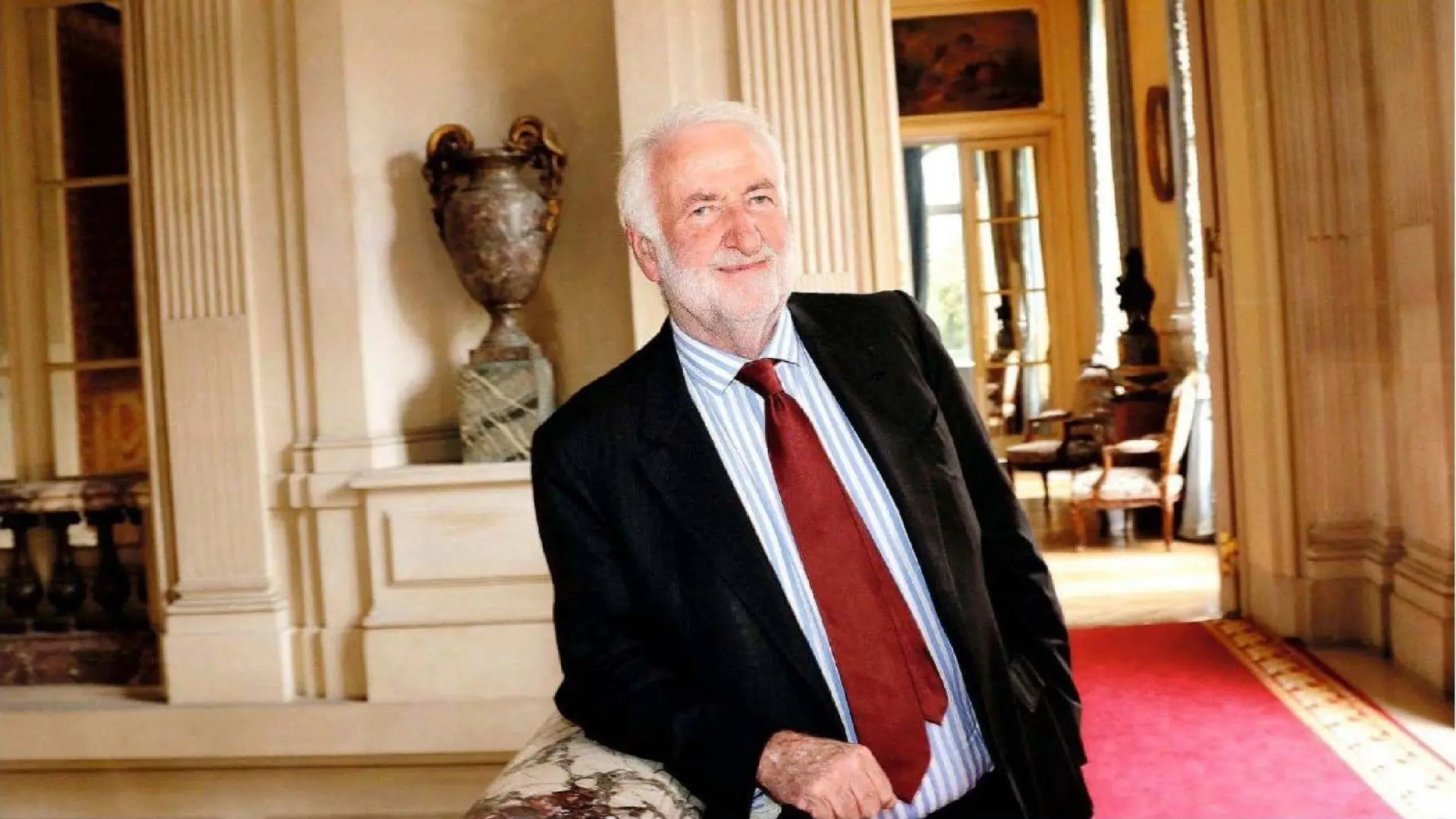
The industry loses one of its greatest advocates: Tribute to our Vice President, Loïk Le Floch Prigent

• July 16, 2025 • by Joseph TAYEFEH
The industry loses one of its greatest advocates: Tribute to our Vice President, Loïk Le Floch Prigent
Loïk Le Floch Prigent passed away today, but his work in the service of our energy sovereignty and his love for the plastics industry will continue to light the way for all those who, like him and often after him, have the courage to say, despite the headwinds, that without industry there can be neither prosperity nor freedom.

Loïk passed away today. And with him, a certain idea of industrial France falters for a moment, as if struck by the silence he leaves behind.

He had a deep, firm voice, always with a hint of mischief, which could rouse a room full of engineers or shake up a minister. His phrasing was direct, he had a visceral love for industry, and above all, he fiercely refused to give up.

Loïk never gave in to simplistic ideas. He had seen too much, built too much, fought too hard to be satisfied with slogans or posturing. He knew that industrial reality is made up of complexity, sweat, materials (plastic!), and sometimes loneliness.

He had headed the country's largest public companies, Rhône-Poulenc, Elf Aquitaine, Gaz de France, and SNCF, with a single guiding principle: France's strategic interests. But what strikes me most, beyond his professional achievements, is his unwavering commitment to a vision of progress. His defense of the plastics industry is one of the finest examples of this.

When it was fashionable to blame plastic for all evils, Loïk stood up and spoke out. He denounced plastic bashing as intellectual laziness and industrial suicide. For him, it wasn't about defending a material for its own sake, but about reminding people that there can be no ecological transition without high-performance materials, no sovereignty without mastery of petrochemicals, and no industry without political courage.

In December 2022, Loïk agreed to become Vice President of Plastalliance. I still remember the general meeting where he was unanimously elected. It was clear to see in everyone's eyes: we were honored, but also reassured. Having Loïk by our side meant surrounding ourselves with a man of stature and experience, a fighter who knew how to wield technical arguments and patriotic fervor without ever resorting to demagoguery.

Loïk believed deeply in the reindustrialization of the country. He did not dream of going back to the past, but of a rebuilt, realistic, productive future. During our conferences, webinars, and private conversations, he always came back to this idea: we must trust those who do the work. Not ideologues, not unrealistic demands. But the women and men in factories, workshops, and laboratories.

At over 80 years of age, he asked sharp questions, challenged certainties, and reminded us of the essential: Europe will not survive without industry. And this industry must be defended without hesitation, including, and especially if it manufactures plastic.

Loïk wasn't playing a role. He was that voice. And for me, he was much more than a support. He was a guiding light, a mentor.

Today, I have lost a friend and a role model, Plastalliance has lost a Vice President, and France has lost a great public servant. But we will preserve his legacy: the conviction that we must love industry, not out of nostalgia, but because it is the very foundation of our freedom.

Rest in peace, dear Loïk. Your fight continues in us.

Joseph Tayefeh
Secretary General of Plastalliance

On April 8, 2026, the Council of State issued a landmark ruling in favor of Plastalliance: the highest administrative court overturned the government decree that sought to ban plastic containers from our school cafeterias by simply striking down its legal definition.

Behind the legal jargon (the annulment of Article D. 541-338 of the Environmental Code), the message sent by the judges is clear and scathing. The government erred through overzealousness and dogmatism. The State has, moreover, been ordered to pay 3,000 euros to our union.

Here's why this decision is so important.


Breaking news for the French government: reusable isn’t the same as single-use!

To justify this witch hunt against plastic containers, the government has long used the European Union as a shield. The argument? “It’s Brussels’ fault.” The Council of State has just shattered that excuse.

The courts have reaffirmed a point that Plastalliance has been emphasizing for years: the 2019 European directive explicitly targets only the reduction of single-use plastics (and even then, only certain items such as straws, stirrers, etc.). By attempting to indirectly ban reusable and durable plastic containers, France has engaged in excessive and illegal transposition of the directive. Reusable plastic is a pillar of the circular economy; it has every right to be in our cafeterias.

By attempting to enforce this ban by force, the government created a “technical regulation” that affects economic trade and the internal market, without even bothering to notify the European Commission in advance. Was it afraid of the Commission’s reaction and chose to ignore it? This major procedural error is now the reason for the regulation’s annulment.

The Ruin of Mayors and the Broken Backs of Cafeteria Workers

Beyond the law, it is the reality on the ground that prevails. Set to take effect in 2028 in municipalities with fewer than 2,000 residents, this ban was a financial and social time bomb.

Replace plastic? Fine, but with what—and at what cost? Glass, steel, aluminum, and ceramics are produced by highly energy-intensive industries that rely heavily on fossil fuels. Their costs are skyrocketing. Imposing these materials on small communities would condemn them to astronomical expenses they can no longer bear. Not to mention the transportation and fuel costs for washing operations when these aren’t handled in-house—costs that rise as the weight being transported increases. This isn’t theory; it’s physics.

And what about the people involved? Just ask the school staff! Replacing plastic food trays with stainless steel or glass ones means carrying much heavier loads at arm’s length every day. It turns mealtime into an unbearable cacophony for both the staff and our children.

Proof from the hospital: plastic is safe

Clear proof of the absurdity of this anti-plastic campaign: the Council of State left untouched the exemptions that the decree provided for pediatric, obstetric, and neonatal services.

Here is a list of the plastic products covered by this list:

“1. Containers that constitute a medical device as defined in Article L. 5211-1 of the Public Health Code;

“2. Containers used to ensure an adequate level of safety and hygiene for individuals requiring sterile food;

“3. Containers for prepackaged processed products, as defined in Article 2 of Regulation (EC) No 852/2004 of the European Parliament and of the Council of April 29, 2004, on the hygiene of foodstuffs, and in Article 2 of Regulation (EU) No 1169/2011 of the European Parliament and of the Council of October 25, 2011, on the provision of food information to consumers, provided they are not intended to be reheated;

“4. Food containers and substitutes as defined by Regulation (EU) No. 609/2013 of the European Parliament and of the Council of June 12, 2013, on food intended for infants and young children, foods intended for special medical purposes, and total daily ration substitutes for weight control, provided they are not intended to be reheated;

“5. Teats and bottle rings;

“6. Films used as lids, covers, and other closure devices, as well as seals, provided they are not intended to be heated;

“7. Cutlery, provided that the plastic component has been designed to eliminate any risk of injury to young children;

“8. Containers in which the plastic component designed for ergonomic purposes or to provide a thermal or sound barrier does not come into contact with food.”

Why? Because plastic remains the safest, most hygienic, and most suitable material for critical environments. If it is essential and safe for our infants in the hospital, by what miracle would it suddenly become toxic for 6-year-olds at school? Let’s remember that plastic containers have always been permitted in prisons, healthcare facilities, festivals, and fast-food restaurants. Science and logic have ultimately prevailed over ideology.


The only ones who didn't look away

In this fight, it is worth highlighting an uncomfortable truth: Plastalliance was the only industry organization to step up and defend this sector. Where others chose to give up, bow down, or simply look the other way—believing the battle was lost before it began in the face of the media and political steamroller—we refused to abandon our manufacturers and local communities. We chose to fight back, relying on legal rigor and scientific truth. This outcome proves that we must never give in to fatalism.

What now? We're keeping a close eye on things

With the repeal of the container regulations, the entire ban has collapsed. Local governments, both large and small, now have complete freedom to choose the material they deem most appropriate, most ergonomic, and most cost-effective for their cafeterias.

If the government insists on pushing ahead and drafting a new decree, it has been warned: this time, it will be subject to rigorous scrutiny by the European Commission. And Plastalliance will be there.  

The Council of State didn’t even need to consider our other arguments (including the violation of the new European PPWR regulation on packaging) to overturn the ruling. We therefore still have all our options open.

Plastalliance will continue to tirelessly defend the industrial sector, jobs in France and Europe, and the autonomy of our regions in the face of the excesses of punitive environmentalism.